|
|

Getting a car is very often one of the key financial goals for many. It is usually
the second largest commitment after buying a home. If you own or have owned a car,
you know that buying a car is not an easy task. It is a business transaction that
involves a tremendous amount of time and effort to ensure you get the best deal.
You basically counter a variety of options when you think of buying a car. Sporty
or practical? Young people will go for sporty types while a 40-year old father may
prefer a practical machine. Used or new? This will basically depend on the financial
health of the buyers. There are other factors to consider and it is impossible to
outline all of them.

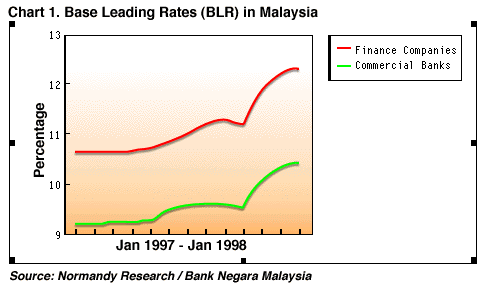
The timing to buy a car depends a lot on market conditions. During the good times
when interest rates are low and loans are more accessible, you would want to take
advantage of the lower loan cost and lock in a fixed rate loan.
During bad times, you may want to put your buying plan on hold particularly when
credit is tight. Your money is better spent on more productive areas. A good indicator
for those who can't decide if its the right time is to look at the local motor industry
itself. Already the industry is feeling the heat given the drastic slowdown in the
economy. Many car distributors have reported massive decline in sales. They expect
sales to plummet further with the weak consumers demand.
The state of the car market is also no different from the economic cycles. It is
usually one of the first markets to show the effects of the changes in the economic
cycle. In the early 1990s when the economic engine was running at full speed, there
was strong demand for imported or luxury cars as more people could afford them. It
was also common to see middle-income families owning more than one car.
The demand for local cars was so great that buyers had to wait up to six months for
the cars they wanted. In some cases, buyers could not even get the color options
they want after waiting for months.
Clearly, knowing the state of the economy helps in your decision to buy now or wait
a little longer. Currently, many cash-strapped individuals have been forced to postpone
their plans of getting their dream cars.

Not everyone can afford to own a brand new car. For some, buying a used car is
one alternative. Consider the pros and cons of buying a new or used car. Although
you have to fork out more for a new car, the obvious advantage is you know the entire
history of the car, cost of repairs and maintenance is likely to be minimal as you
would have full manufacturer's warranty.
A used car however costs a lot less. But, it will require higher maintenance cost
as you do not know the full history of the car and how well it has been maintained.
In addition, you may not be able to secure a warranty for a used car. The advantage
of course is you get one within your budget limit. Weigh the pros and cons carefully
before considering to get a new or used car..

|