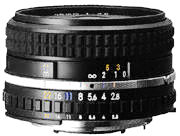
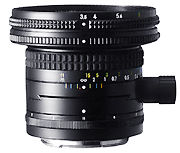
Additional Information on Nikkor 28mm f/2.0, f/2.8 and f/3.5 Lenses


The 28mm focal length is considered today to be a standard wideangle by an increasing number of photographers especially for those who finds they always has to deal with PR photography. The main advantage of the 28mm lens is its ability to capture a fairly large subject area without creating undue concern over its perspective rendition. I always thought a 28mm is a better investment than a 35mm or a wider 24mm to handle all round photographic situations. A comparison of 24mm, 28mm and 35mm angles of view should give you an idea of how a 28mm performs.

dual28mmlenses.jpg

Angle of View - 24mm, 28mm, 35mm

Lens

Diagonal

Vertical

Horizontal

24mm

84°

53°

74°

28mm

75°

46°

65°

35mm

63°

38°

54°


The 28mm has quite a long history dating back to the rangefinder days during the '50. Nikon has a W-Nikkor 2.8cm f/3.5 lens introduced as early as November, 1952 and it was quite popular optic despite the 28mm lens requires aid of an accessory finder attached for photo composing. It was until the arrival of the
Nikon SP in 1957 which eliminate the need for such device as the camera has a provision for built-in 28mm frameline. The old rangefinder lens is a 6 elements lens with 43mm filter attachment and focuses from 3 ft to infinity. Well, compared with the moderate view of a 35mm wideangle lens, the typical wideangle effects become obvious at 28mm but not as apparent as lenses of 24mm focal length and that could well explained why lenses at 28mm focal length are so popular among many amateurs and serious users. The wider angle can be used for a wide variety of photographic applications including commercial, industrial, architectural, travel, landscape and news photography.

28mm angle.Gif
If you are undecided about which wide-angle is best for your type of photography, it might be a good idea to take a look through a viewfinder with a 28mm lens. The image you'll see will have more pronounced perspective than a 50mm lens but not to a great extent.

Compare this with the autofocus AF Nikkor 28mm f/2.8 lens group

With group portraits, a 28mm lens can mean to provide a truly pleasing picture. You can move in close enough for facial detail and at the same time have sufficient pictorial coverage. And, giving some consideration to the subject's surroundings, the use depth of field to control the zone of sharpness at the sides and behind the main subject.

Nkon Series E.jpg
Those who often cover PR photography such as shooting during a round table dinner function will appreciate the broader coverage a 28mm provides. Perhaps the only thing you have to be aware is, sometimes the people or objects at the extreme two edges of the picture frame could be slightly distorted if the working distance is too close.

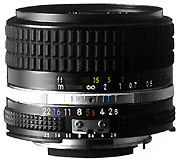
<<< --- The Series E 28mm f/2.8 lens was quite popular among many photographers who often engaged in PR photography..

28mmf2.0.jpg
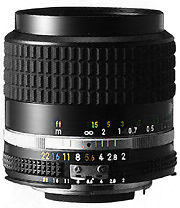
Another significant advantage of the 28mm focal length lenses is, most modern electronic flash units are designed to cover the field of view of a wideangle 35mm of 63 degree picture angle. However, since most electronic flash provides an wide-adaptor, you may use it to extend and has the field of view of the 28mm lens well covered. Those days, to cope with the growing popularity of the 28mm lens, Nikon offered not just one, but three lenses at this particular focal length, with each of them providing with varying lens speeds. The Nikkor 28mm f/2.0 has the fastest lens speed among the three. This speed permits easy, accurate focusing and facilitates picture taking indoors or under unfavorable lighting conditions. It also features the floating element design in order to maintain it superlative image quality when extends to close-range photography.

Compared with the fast f/2.0 version, the design of the Nikkor 28mm f/2.8 and Nikkor 28mm f/3.5 Nikkors are much more compact in size and much lighter in weight .This ensures easy handling and provides high portability for those who always on the move. Further, lenses with slower speed usually interpret cheaper price than lenses with fast lens speed and thus, both f/2.8 and f/3.5 are very popular wideangle lenses used among Nikon users. However, despite their respective size, weight and price variations, all the three 28mm Nikkor lenses here have been famed for their optical performance. They are designed to counter common optical aberrations such as spherical and coma, ensuring uniformly sharp images over the entire film plane even at their respective larger apertures. Personally, among the three wideangle lenses, I felt the Nikkor 28mm f/2.8 lens has the best price over performance ratio. The AI and AI-s of the 28mm f/2.0 and f/2.8 lenses employ with a Close Range Correction System to ensure the high Nikkor optical performance are well extends to their closest working distance. The Nikkor 28mm f/2.8 is also the Nikkor lens has the closest minimum focusing distance to merely 0.2m (0.7 ft) - the closest a Nikkor wideangle lens can achieved. Another big plus point is its high magnification power when used inversely, it can yield a up to a powerful 9X Magnification when used reverse on a Bellow Unit.

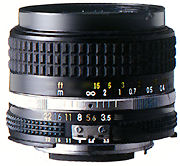
The fast Nikkor 28mm f/2.0 was, in fact the second Nikkor lens that was treated with Nikon's integrated Coating (NIC) - (NIC was first used on the Nikkor 35mm f/1.4 lens back in 1971). It is also a superb wideangle lens as it packs many original Nikkor optical innovations within its optical design. Despite its large aperture of f/2.0, it has been extremely well corrected to contain and correct spherical aberrations and Coma which attributes to its high contrast and sharp images even at its maximum apertures. Amidst all the good features and fast lens speed, Nikon optical engineers still able to maintain a uniform 52mm filter attachment which enables the lens shares many standard accessories. If you have a limited budget to spare but still wishes to own a prime lens of top rated performance, perhaps the Nikkor 28mm f/3.5 could well and deservingly fits your requirement. Don't underestimate this lens, even if it does not provide many pioneering optical innovation such as rear focusing system etc., and this lens just employs a very simple, straight forward optical design which could have been contributed to its extraordinary image quality it provides. I have even tried an AI'd lens for a good long holiday trip and the returned images made me kept amazed at its uniform image quality it presents. So, even if it doesn't close focus to such extreme as the f/2.8 or enjoy a fast speed as the f/2.0 counterpart, this lens still deserves a good mention as a poor man, high performance Nikkor 28mm optic !

Development of 28mm extends to AF. In 1985, the first AF Nikkor at 28mm with a new optical construction of a simple 5 elements in 5 groups design was introduced. The lens carries a very fragile physical design and was redesign with a new cosmetic later. However, when Nikon introduced distance information chip into the Nikkor, the AF 28mm was again revised to a entirely new optical formula of 6 elements design in 1994. the new lens carries designation as AF-D 28mm f/2.8. But a big breakthrough occurred actually a year earlier in August, 1993 where Nikon surprised everyone by skipping a possible introduction of a f/2.0 AF lens with a ultra-fast AF-D 28mm f/1.4 lens ! The lens, along with Canon's FD 24mm f/1.4L and EF 24mm f/1.4 L remains one of fastest wideangle lens available in 35mm photography but the AF-D 28mm f/1.4 is the sole candidate that offers the fastest lens speed at the 28mm focal length class.

Nikon F5 w/28mm f1.4.jpg

AF 28mmf2.8.jpg

MORE... see below for more links: The current two Nikkor lenses are the AF-D 28mm f/1.4 and AF-D 28mm f/2.8. Both have a distance chip incorporated for extra element during calculation of exposure with appropriate Nikon AF SLR camera bodies.

Manual Focus Versions:- 28mm focal length Manual Focus Nikkor Lenses:
|
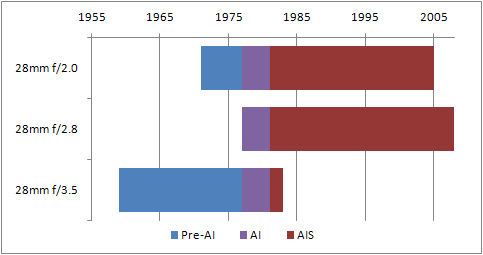
1959- early '70 | mid-1970 (pre-AI) | Late 1970 | Early 1980 - Present: 28mm f/2.0s | 28mm f/2.8s | 28mm f/3.5s | Relative: PC-Nikkor 28mm f/2.8 and PC-Nikkor 28mm f/4.0 Relative:- AF Nikkor 28mm f/2.8s autofocus wideangle lens | AF Nikkor 28mm f/2.8D autofocus wideangle lens | AF Nikkor 28mm f/1.4D autofocus wideangle lens

| Message Board | for your Nikkor Optics in a shared environment
| Message Board | Specifically for Dispose or Looking for new/used Nikon/Nikkor photographic equipment

weblibrary.gif   Nippon Kogaku Rangefinder Resources | Nikon F | Nikon F2 | Nikon F3 | Nikon F4 | Nikon F5 | Nikon F6 | Nikkormat / Nikomat | Nikon FM Series | Nikon FE/ FA | Nikon EM/FG/FG20 | Nikon Digital SLRs | Nikon - Other models

Nikon MF RF-Nikkor lenses for Rangefinder cameras:- Main Index Page
Nikon Auto Focus Nikkor lenses:- Main Index Page
Nikon Manual Focus Nikkor lenses:-
Fisheye-Nikkor Lenses - Circular | Full Frame | Ultrawides Lenses - 13mm15mm18mm20mm | Wideangle Lenses - 24mm28mm35mm | Standard Lenses - 45mm 50mm 58mm | Telephoto Lenses - 85mm105mm135mm180mm & 200mm | Super-Telephoto Lenses - 300mm 400mm 500mm 600mm 800mm 1200mm |

Nikkor Link.jpg   Special Application lenses:
Micro-Nikkor Lenses - 50mm~55mm -60mm 85mm -105mm 200mm Micro-Zoom 70-180mm
Perspective Control (PC) - 28mm 35mm PC-Micro 85mm
Dedicated Lenses for Nikon F3AF: AF 80mm f/2.8 | AF 200mm f/3.5 EDIF
Depth of Field Control (DC): 105mm 135mm
Medical Nikkor: 120mm 200mm
Reflex-Nikkor Lenses - 500mm 1000mm 2000mm
Others: Noct Nikkor | OP-Nikkor | UV Nikkor 55mm 105mm | Focusing Units | Bellows-Nikkor 105mm 135mm
Nikon Series E Lenses: 28mm35mm50mm100mm135mm | E-Series Zoom lenses: 36~72mm75~150mm70~210mm


MF Zoom-Nikkor Lenses: 25~50mm | 28~45mm | 28~50mm | 28~85mm | 35~70mm | 36~72mm E | 35~85mm | 35~105mm | 35~135mm | 35~200mm | 43~86mm | 50~135mm | 50~300mm | 70~210mm E | 75~150mm E | 80~200mm | 85~250mm | 100~300mm | 180~600mm | 200~400mm | 200~600mm | 360~1200mm | 1200~1700mm

Tele-Converters: TC-1 | TC-2 | TC-200 | TC-201 | TC-300 | TC-301 | TC-14 | TC-14A | TC-14B | TC-14C | TC-14E | TC-16 | TC-16A | TC-20E

Recommended links to understand more technical details related to the Nikkor F-mount and production Serial Number:
http://rick_oleson.tripod.com/index-153.html by: my friend, Rick Oleson
http://www.zi.ku.dk/personal/lhhansen/photo/fmount.htm by: Hansen, Lars Holst
http://www.mir.com.my/rb/photography/hardwares/nikonfmount/lens2.htm
http://www.photosynthesis.co.nz/nikon/serialno.html

Recommended Reading Reference on Nikon cameras and Nikkor lenses | about this photographic web site

Search.gif | Back | Main Index Page of Nikkor Resources | Back | Main Index Page of Pictorial History of Nikon SLRs

MIR Logo.gif   Home - Photography in Malaysia

leofoo.Gif Co-developed with my web buddy, Rick Oleson® & LARs.Gif Denmark, Creator of the Nikon Repair Group Mailing-List; A contributing effort to Michael Liu's Classic Nikon SLRs and Nikkor optic site.

Credit: MCLau®, who has helped to rewrite some of the content appeared this site. Chuck Hester® who has been helping me all along with the development of all these Nikon websites; Lars Holst Hansen, 'Hawkeye' who shares the same passion I have; Ms Rissa, Sales manager from Nikon Corporation Malaysia for granting permission to use some of the official content; Ted Wengelaar, Holland who has helped to provide many useful input relating to older Nikkor lenses; Some of the references on production serial numbers used in this site were extracted from Roland Vink's website; Hiura Shinsaku from Nikomat Club Japan. Lastly, to all the good people who has contributed their own expeience, resources or kind enough granted permission to use their images of their respective optic in this site. It is also a site to remember a long lost friend on the Net. Note:certain content and images appeared in this site were either scanned from official marketing leaflets & brochures published by Nikon and/or contribution from surfers who claimed originality of their work for educational purposes. The creator of the site will not be responsible for may discrepancies arise from such dispute except rectifying them after verification. "Nikon", "Nikkormat", "Nippon Kokagu KK" & "Nikkor" are registered tradename of Nikon Corporation Inc., Japan. Site made with an Apple IMac.